Dr. Azam Zabihi
Research
Fields of interest:
Medical Physics and PET Imaging, Radiation Detectors, Monte Carlo Simulations, Cryogenic and Liquid-Argon Detectors, Radiation Physics and Dosimetry
Biography:
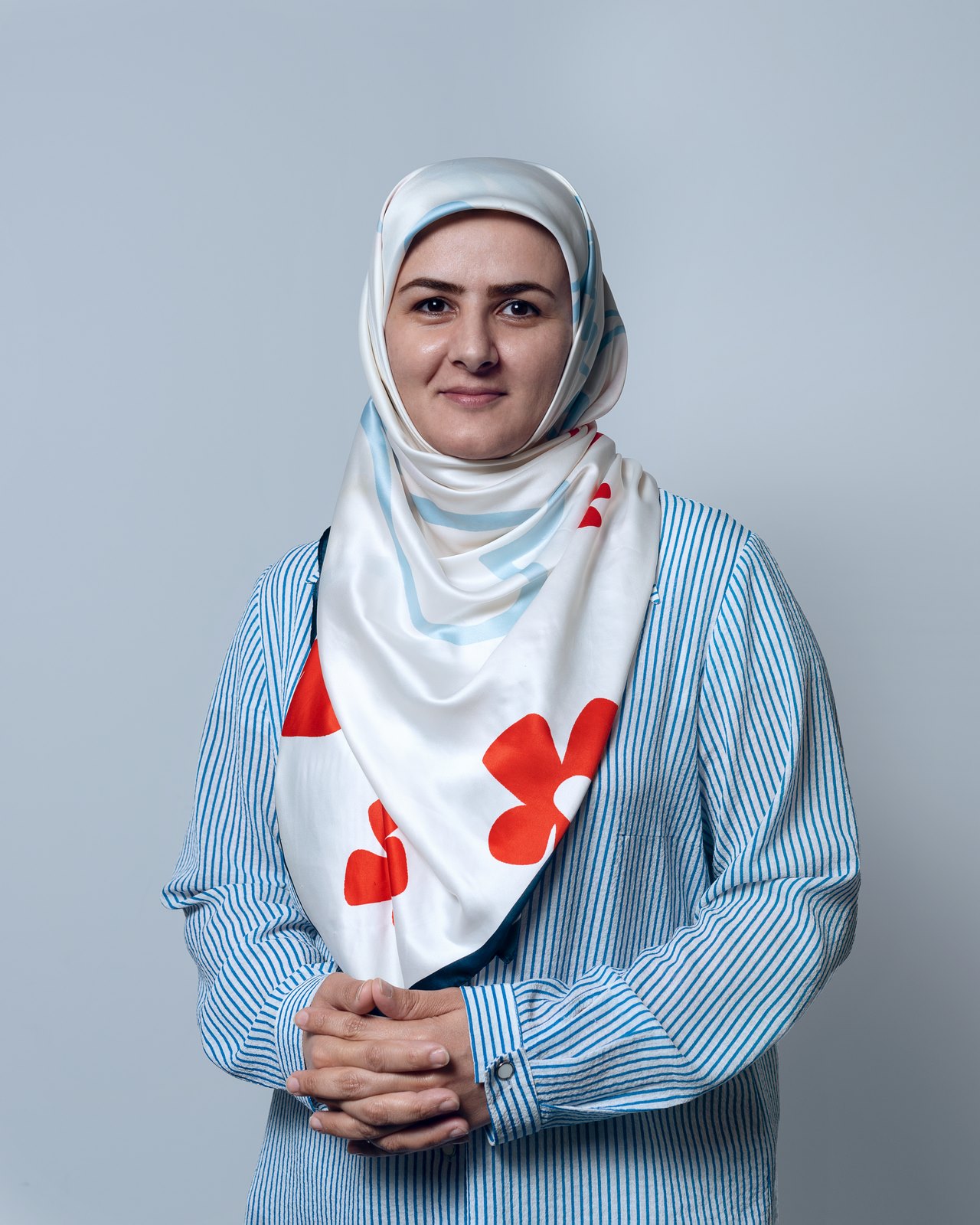
Dr. Azam Zabihi is a researcher (adiunkt) at the Nicolaus Copernicus Astronomical Center of the Polish Academy of Sciences (CAMK PAN). She joined Astrocent in September 2020 and is currently a member of the Medical Physics and Radiation Detectors Group led by Prof. Masayuki Wada.
She received her PhD in Physics from Bu-Ali Sina University in 2019. Her earlier research focused on Monte Carlo simulations of radiation interactions with biological systems, including Geant4 and Geant4-DNA studies of DNA damage and the relative biological effectiveness of ionizing radiation. She also completed a research fellowship at the University of Campinas (UNICAMP), Brazil.
At Astrocent, she initiated and leads the development of the 3Dπ total-body PET concept, a novel medical imaging system based on xenon-doped liquid argon scintillation and SiPM readout. This work resulted in a first- and corresponding-author publication in Physics in Medicine & Biology and established a research direction connecting detector technologies developed in astroparticle physics with advanced medical imaging.
She is a member of the DarkSide-20k and ARIA collaborations and works on liquid-argon detector R&D, cryogenic systems, detector instrumentation, slow control, and data analysis. At Astrocent, she leads the development of local cryogenic liquid-argon detector infrastructure, including hardware selection, procurement, assembly, system integration, detector monitoring, and slow-control software.
Her international experimental activities include participation in the assembly, integration, and commissioning of the DarkSide-20k Mockup at LNGS, Italy, and a technical research visit to IHEP, China, focused on cryogenic systems, TPC front-end electronics, SiPM-based readout, signal conditioning, and DAQ integration. She also contributes to detector simulation and data analysis for the ReD (Recoil Directionality) experiment.
She received an NCN MINIATURA 9 grant for the development of cryogenic infrastructure for experimental studies of xenon-doped liquid argon scintillation.
Publications:
Main scientific interests
Her current research combines Monte Carlo simulations, programming and data analysis, hands-on detector development, cryogenic instrumentation, and experimental physics to develop advanced radiation detectors for medical imaging and astroparticle physics.
She is also strongly committed to scientific mentoring and supporting early-career researchers. She has advised, mentored, and collaborated with MSc and PhD researchers internationally on projects in radiation biology, dosimetry, particle therapy, Monte Carlo simulations, PET imaging, and particle physics, with several collaborations resulting in peer-reviewed publications. She also contributes to scientific training through Geant4 workshops and educational activities.
Degrees and titles
Contact
Position in the project
Postdoctoral Researcher in Medical Physics and Radiation Detectors group
azabihi at camk.edu.pl
Office
5.39